
Your body runs on magnesium. This mineral powers over 300 processes inside you right now, from keeping your heartbeat steady to building strong bones.
Yet most people don’t get enough of it through their daily meals.
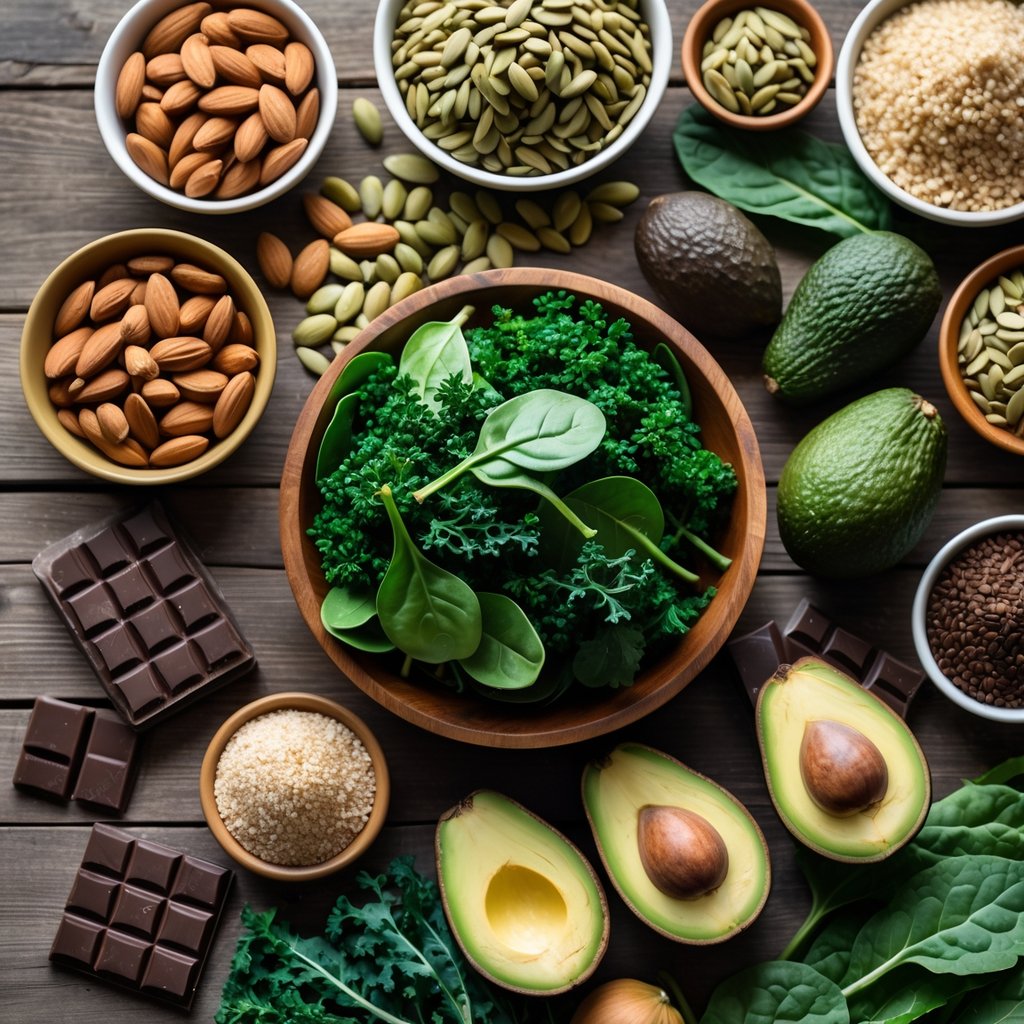
You can easily meet your magnesium needs by eating nuts, seeds, leafy greens, whole grains, legumes, and certain fruits like avocados and bananas.
The good news? You don’t need to count every milligram or take complicated supplements.
Adding a few key foods to your grocery cart makes all the difference.
This guide shows you which foods deliver the most magnesium and how to work them into your everyday eating.
You’ll learn how much you actually need, what affects how your body absorbs it, and when supplements might help.
Why Magnesium Matters for Your Body
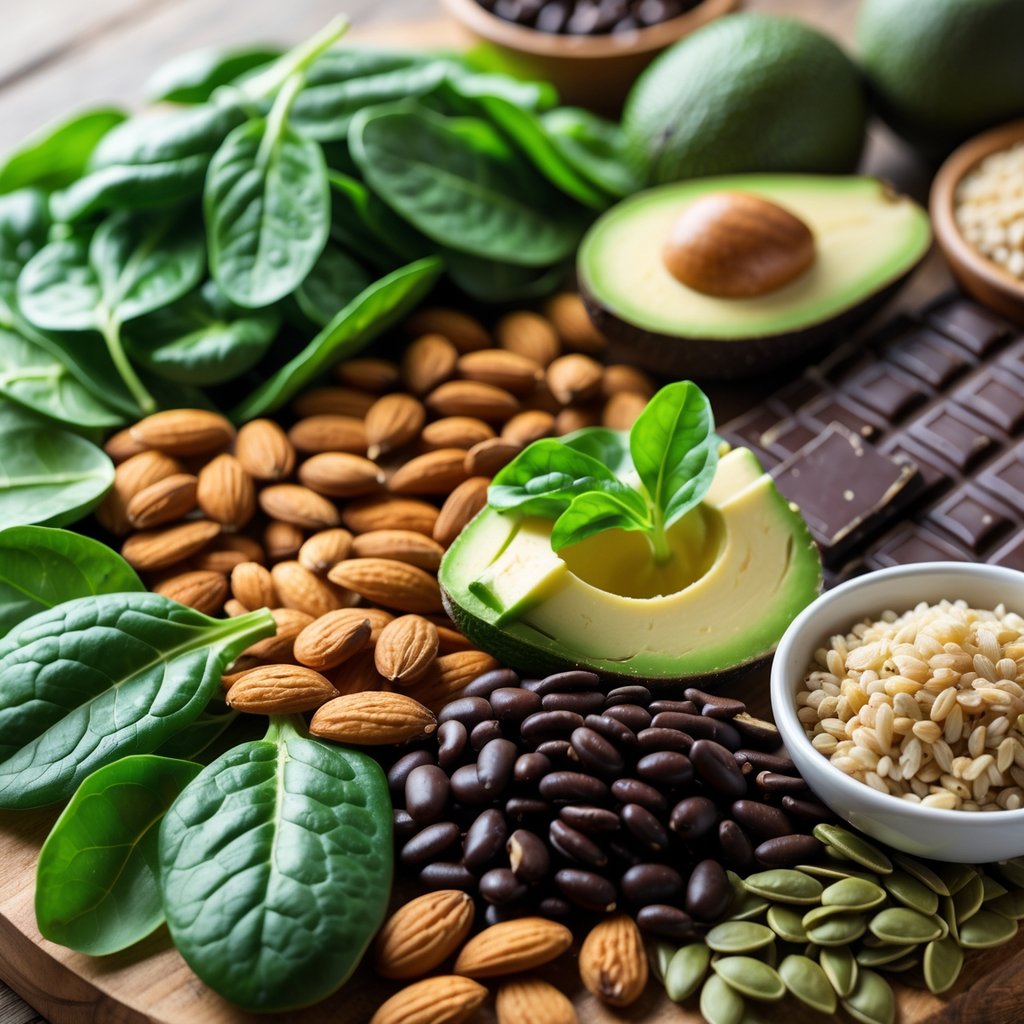
Your body relies on magnesium for more than 300 different processes, from keeping your heart beating steadily to building strong bones.
Most people don’t get enough of this mineral, which can lead to serious health problems over time.
Key Functions of Magnesium
Magnesium works as a helper in hundreds of chemical reactions happening inside you right now.
Your muscles need it to contract and relax properly. Without enough magnesium, you might experience cramping or weakness.
Your heart depends on magnesium to maintain a normal rhythm. This mineral helps regulate your blood pressure by relaxing your blood vessels.
It also plays a vital role in how your body creates energy from food.
Your bones store about 60% of all the magnesium in your body. It works alongside calcium to keep your skeleton strong and dense.
Magnesium also helps your nerves send signals throughout your body, which affects everything from your mood to your sleep quality.
The mineral assists in making proteins and DNA in your cells. It helps control blood sugar levels and supports your immune system in fighting off infections.
Health Benefits Backed by Science
Getting enough magnesium in your diet can lower your risk of heart disease.
Studies show that proper magnesium intake helps prevent irregular heartbeats and reduces the chance of coronary spasms.
Your blood sugar control improves with adequate magnesium. The mineral helps your body use insulin more effectively, which is especially important if you’re at risk for diabetes.
Magnesium supports better bone health as you age. It works with vitamin D and calcium to prevent osteoporosis and fractures.
Research also suggests that magnesium may help reduce the frequency and intensity of migraines.
Your mental health benefits from proper magnesium levels too. Some studies link adequate magnesium intake to reduced anxiety and better sleep quality.
Risks of Magnesium Deficiency
Early signs of magnesium deficiency include fatigue, muscle cramps, and weakness.
You might also experience numbness or tingling in your hands and feet.
A serious magnesium deficiency can cause dangerous heart rhythm problems.
Your blood pressure may rise, and you could develop insulin resistance over time.
Chronic low magnesium intake weakens your bones and increases fracture risk.
It can also trigger severe muscle spasms and seizures in extreme cases.
Your body may struggle to maintain proper calcium and potassium levels without enough magnesium.
About 48% of people consume less magnesium than experts recommend.
The daily requirement ranges from 310 to 420 milligrams depending on your age and sex.
Women typically need 310-320 mg daily, while men require 400-420 mg.
How Much Magnesium Do You Need?
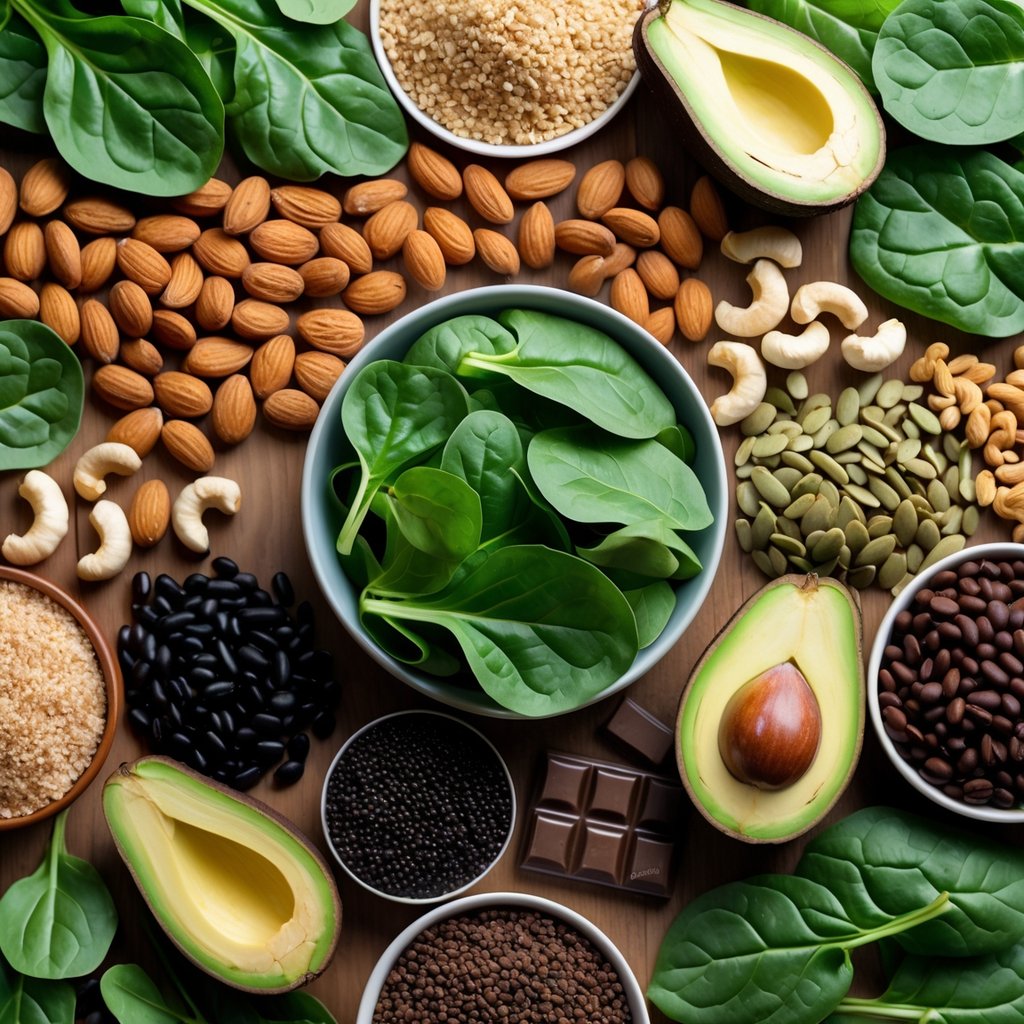
Your body requires different amounts of magnesium depending on your age and sex.
Most adults need between 310 and 420 mg daily.
Many people fall short of these targets, which can lead to various health problems.
Recommended Daily Amounts by Age and Gender
The amount of magnesium you need changes throughout your life.
Adult men require more than adult women, and your needs increase slightly as you get older.
Here’s what you should aim for each day:
| Age Group | Male | Female | Pregnant | Breastfeeding |
|---|---|---|---|---|
| 19-30 years | 400 mg | 310 mg | 350 mg | 310 mg |
| 31+ years | 420 mg | 320 mg | 360 mg | 320 mg |
Children need less magnesium than adults.
Boys ages 14-18 need 410 mg daily, while girls in the same age range need 360 mg.
You can meet these targets by eating a varied diet rich in whole foods.
Most people in the United States don’t get enough magnesium from their regular eating habits.
Signs You’re Not Getting Enough
Early magnesium deficiency often goes unnoticed because symptoms can be subtle.
You might experience muscle cramps or twitches as one of the first warning signs.
Other symptoms include:
- Fatigue and weakness
- Loss of appetite
- Nausea and vomiting
- Abnormal heart rhythms
- Numbness or tingling
Severe magnesium deficiency can lead to more serious problems.
Your blood pressure might become harder to control. You could develop issues with bone health or blood sugar regulation.
Most healthy people won’t develop a serious deficiency if they eat poorly for a short time.
Your body stores magnesium in your bones and tissues as a backup.
Groups at Risk for Low Intake
Certain people have a harder time maintaining healthy magnesium levels.
Older adults absorb less magnesium from food and lose more through their kidneys.
People with digestive disorders face increased risk.
Conditions like Crohn’s disease and celiac disease interfere with magnesium absorption in your gut.
Type 2 diabetes can cause your body to lose more magnesium through urine.
If you take certain medications like proton pump inhibitors or diuretics, your magnesium levels might drop.
Heavy alcohol use depletes your magnesium stores over time.
Anyone in these risk groups should pay extra attention to their magnesium intake through food sources or talk to their doctor about supplementation.
Top Foods High in Magnesium
Your body needs between 310 and 420 mg of magnesium daily, depending on your age and sex.
The good news is that many common foods deliver solid amounts of this essential mineral.
Magnesium Content per Serving
Pumpkin seeds top the list with 150 mg of magnesium per ounce.
That’s about 36% of your daily needs in just a small handful.
Chia seeds pack 111 mg per ounce, while almonds deliver 80 mg and cashews provide 72 mg.
These nuts and seeds make it easy to boost your magnesium intake quickly.
Leafy greens work hard for you too.
A half cup of cooked spinach contains 78 mg of magnesium.
Swiss chard offers 75 mg in the same serving size.
Whole grains and legumes pull their weight as well.
You’ll get 60 mg from half a cup of cooked quinoa or black beans.
Even a medium banana adds 32 mg to your daily total.
Dark chocolate fans have reason to celebrate.
One ounce of dark chocolate with 70-85% cocoa contains 64 mg of magnesium.
How to Incorporate These Foods
Start your morning with shredded wheat cereal topped with sliced bananas and a tablespoon of flaxseed.
This breakfast combination gives you over 120 mg of magnesium before you leave the house.
Toss pumpkin seeds or almonds into your salads at lunch.
Add spinach or Swiss chard as your base greens.
You can roast the seeds with a bit of olive oil and sea salt for extra flavor.
Snack on a square of dark chocolate with a handful of cashews in the afternoon.
This satisfies your sweet tooth while delivering real nutrition.
Make quinoa your go-to grain for dinner sides.
Black beans work great in tacos, soups, and grain bowls.
You can blend avocado into smoothies or spread it on toast.
Keep a small container of mixed nuts and seeds in your bag for busy days.
Simple Shopping List
Nuts and Seeds
- Pumpkin seeds (hulled, roasted)
- Chia seeds
- Almonds
- Cashews
- Flaxseed
Greens and Vegetables
- Spinach
- Swiss chard
- Avocados
- Potatoes with skin
Grains and Legumes
- Quinoa
- Black beans
- Shredded wheat cereal
- Edamame
Other Items
- Dark chocolate (70-85% cocoa)
- Bananas
- Plain low-fat yogurt
Buy these items each week and you’ll have no trouble meeting your magnesium needs.
Focus on variety rather than eating the same magnesium-rich foods every day.
Nuts and Seeds Packed With Magnesium
Nuts and seeds rank among the most concentrated sources of magnesium you can add to your daily meals.
A single ounce of many varieties delivers 15-50% of your daily magnesium needs, making them an efficient choice for meeting nutritional goals.
Almonds, Cashews, and Peanuts
Almonds give you 76.5 mg of magnesium per ounce, which equals 18% of your daily value.
You get this benefit from about 24 kernels.
Almond flour bumps up the magnesium content even more, with 251 mg per 3.5 ounces.
Cashews match almonds almost exactly.
One ounce of dry-roasted cashews contains 74 mg of magnesium (18% DV).
Raw cashews contain even more, with 292 mg per 100 grams, making them one of the richest magnesium-rich foods available.
Peanuts belong to the legume family but share similar magnesium content with tree nuts.
They work well as affordable options when you’re looking for foods high in magnesium on a budget.
You can eat these nuts raw, roasted, or as nut butter.
All forms retain good magnesium levels, though processing methods may slightly reduce the mineral content.
Pumpkin, Chia, and Flax Seeds
Pumpkin seeds pack 165 mg of magnesium into just one ounce.
That’s 37% of your daily value.
They also provide protein, fiber, and healthy fats that help lower bad cholesterol while raising good cholesterol.
Chia seeds deliver 110 mg per ounce (26% DV).
These tiny black or white seeds also bring you fiber, protein, and omega-3 fatty acids.
They help reduce blood pressure and support digestive health.
Flax seeds provide 27% of your daily magnesium requirement in a one-ounce serving.
They’re low in carbohydrates but high in both soluble and insoluble fiber.
You can mix these seeds into smoothies, yogurt, or oatmeal for an easy magnesium boost.
Beans, Legumes, and Whole Grains as Magnesium Sources
Beans and legumes pack serious magnesium into every serving.
Options like black beans deliver nearly 30% of your daily needs in just one cup.
Whole grains like quinoa and brown rice add even more magnesium to your meals while providing fiber and other nutrients.
Black Beans, Chickpeas, and Lentils
Black beans stand out as magnesium champions among legumes.
You’ll get 120 mg of magnesium from one cup of cooked black beans, which covers about 29% of what most adults need daily.
Chickpeas give you another solid option for boosting your magnesium intake.
A cup of cooked chickpeas contains roughly 80 mg of magnesium.
You can blend them into hummus or toss them into salads.
Lentils work hard as magnesium sources too.
They’re quick to cook and don’t need soaking like many other legumes.
Ways to eat more legumes:
- Add black beans to rice bowls or burritos
- Make hummus with chickpeas for snacking
- Mix lentils into soups or stews
- Create a multi-bean salad with vinaigrette
Other legumes worth trying include cannellini beans (113 mg per cup) and lima beans (81 mg per cup).
Even peanuts count as legumes, giving you 260 mg per cup or 49 mg in two tablespoons of peanut butter.
Grains High in Magnesium: Quinoa and Brown Rice
Grains high in magnesium include quinoa and brown rice, both excellent additions to your regular meal rotation.
While they contain less magnesium than beans, they still contribute to your daily intake.
Brown rice contains more magnesium than white rice because the processing that creates white rice strips away the magnesium-rich outer layers.
One cup of cooked brown rice provides about 86 mg of magnesium.
Quinoa delivers similar amounts and cooks faster than brown rice.
You get roughly 118 mg of magnesium per cup of cooked quinoa.
Simple ways to use these grains:
- Swap white rice for brown rice in your usual recipes
- Use quinoa as a base for grain bowls
- Mix cooked grains with beans to boost magnesium content even more
Whole grains keep their natural magnesium content intact, unlike refined grains.
Pairing your grains with legumes creates meals that maximize your magnesium intake while providing complete protein.
Magnesium-Rich Fruits and Vegetables
Fruits and vegetables are accessible ways to boost magnesium intake. Dried figs top the fruit list with 101mg per cup, while leafy greens like spinach deliver substantial amounts.
Fruits High in Magnesium: Avocado, Banana, Papaya
Avocados pack 58mg of magnesium per fruit—about 14% of your daily needs. Add them to toast, smoothies, or salads for an easy boost.
Bananas provide 41mg per cup sliced, or about 32mg per medium banana. They’re portable, require no prep, and also deliver potassium.
Papaya offers 30mg per cup of fresh fruit and 98mg per 200 calories, making it efficient for magnesium per calorie. Its enzymes also support digestion.
Other notable magnesium-rich fruits include:
- Dried figs: 101mg per cup (24% daily value)
- Guavas: 36mg per cup
- Blackberries: 29mg per cup
- Raspberries: 27mg per cup
These options provide both fiber and magnesium.
Leafy Greens: Spinach, Swiss Chard, Collards
Spinach leads among vegetables, with a cup of cooked spinach delivering about 157mg of magnesium—37% of most adults’ daily needs. Cooking concentrates the mineral as the leaves wilt.
Swiss chard offers around 150mg per cooked cup and brings colorful stems loaded with extra nutrients.
Collard greens supply about 50mg per cooked cup. They’re less dense than spinach but still worthwhile. Try them steamed, sautéed, or in soups.
Leafy greens combine multiple minerals and vitamins in highly absorbable forms.
Other Vegetables: Potatoes, Corn, Peas
Potatoes contain 48mg of magnesium in a medium baked potato with skin. Keep the skin on for maximum benefit.
Sweet potatoes provide about 32mg per medium potato.
Corn delivers 45mg per cooked cup, and fresh corn on the cob brings magnesium plus fiber and B vitamins.
Peas yield 62mg per cooked cup. Green peas work in stir-fries, pasta, or as sides, and are among the more protein-rich vegetables.
These starchy vegetables are filling and help support daily magnesium needs.
Dairy, Fish, and Surprising Sources
Dairy products are known for calcium, but they also supply magnesium. Fish and even drinking water can contribute to your intake in unexpected ways.
Magnesium in Milk, Yogurt, and Cheese
Dairy offers both calcium and magnesium in a single serving.
One cup of nonfat milk provides 24–27mg of magnesium. Used in coffee, cereal, or smoothies, this adds up quickly.
Plain low-fat yogurt delivers 42mg per 8-ounce serving. Cheese contains magnesium too, though amounts vary by type.
If you’re lactose intolerant, many fortified plant-based milks include added magnesium—check labels to compare brands.
Fatty Fish and Dark Chocolate
Fatty fish like salmon and mackerel are rare animal sources of magnesium. A 3-ounce serving of cooked salmon provides about 26mg, along with omega-3s and protein.
Dark chocolate is a standout: one ounce of 70–85% cocoa chocolate contains 64mg of magnesium—more than a banana or a cup of milk. Higher cocoa content means more magnesium, so opt for darker varieties.
Magnesium from Drinking Water
Tap water contains magnesium, but levels vary widely—from 1mg to 120mg per liter, depending on your source.
Drinking 2 liters of water daily could provide up to 240mg of magnesium. Mineral water and some bottled waters may have higher levels, but check labels or request a water quality report for specifics.
Hard water generally contains more magnesium than soft water.
Factors Affecting Magnesium Absorption
Not all dietary magnesium is absorbed. Absorption depends on your digestive system, what you eat alongside it, and overall health.
How the Body Absorbs Magnesium
Magnesium is absorbed in the intestines via two main pathways: passive diffusion (when intake is high) and active transport using proteins like TRPM6 and TRPM7.
Most absorption occurs in the small intestine, with the large intestine playing a supporting role. When magnesium levels are low, the body absorbs more efficiently, and the kidneys help regulate balance.
Typically, 30% to 50% of dietary magnesium is absorbed, with smaller doses absorbed more efficiently.
Diet, Medications, and Bioavailability
Certain foods can reduce magnesium absorption:
- High-fiber foods (in very large amounts)
- Foods rich in phytates (whole grains, legumes)
- Foods high in oxalates (spinach, rhubarb)
Some medications, such as proton pump inhibitors and certain diuretics, also interfere with absorption or increase loss.
Processed foods are problematic—they’re low in magnesium and lack compounds that aid absorption.
The form of magnesium matters: magnesium citrate and chloride are absorbed better than magnesium oxide. Eating magnesium-rich foods with meals typically improves absorption.
When to Consider Magnesium Supplements
Most people get enough magnesium from food, but some health conditions or life stages may require supplements. Excess magnesium from supplements can cause side effects that food sources do not.
Who Should Take Magnesium Supplements?
Supplements are recommended if a deficiency is confirmed by blood tests. Certain groups are at higher risk:
- Older adults
- Individuals with Crohn’s or celiac disease
- People with Type 2 diabetes
- Those taking medications that deplete magnesium
Consult your doctor before starting supplements. They can check your levels and recommend the right dose, considering possible interactions with other medications.
Food should remain your primary source. A varied diet rich in vegetables, nuts, beans, and whole grains typically provides all the magnesium your body needs—without the risks of excess supplementation.
Risks of Taking Too Much Magnesium
You can’t get too much magnesium from food sources. Your body naturally regulates absorption from meals.
Supplements, however, are a different story and can cause problems when taken in excess.
Common side effects of excess magnesium include:
- Cramping and abdominal discomfort
- Diarrhea
- Nausea and stomach upset
These symptoms occur because your digestive system struggles to handle large amounts of supplemental magnesium.
Severe magnesium toxicity is rare but can be dangerous. Extremely high doses, especially in people with kidney problems, may disrupt heart rhythm and breathing.