
Many people taking omeprazole for heartburn or acid reflux wonder if an occasional drink is safe. It’s a common concern, especially when digestive symptoms disrupt daily life.
There’s no direct chemical clash between omeprazole and alcohol, but drinking can worsen acid reflux and make your medication less effective. Alcohol increases stomach acid and relaxes the muscle that keeps acid from backing up into your esophagus.
Let’s break down how omeprazole works, what alcohol does to your digestive system, and why combining the two can be troublesome. We’ll also cover side effects, other interactions, and practical tips for managing acid-related issues if you choose to drink.
Can You Mix Omeprazole and Alcohol?
There’s no direct chemical interaction, but alcohol can undermine omeprazole’s effectiveness and worsen symptoms.
Is It Safe to Drink Alcohol While Taking Omeprazole?
You can technically drink alcohol while on omeprazole without risking a dangerous drug interaction. The two don’t react in your bloodstream like some antibiotics or sedatives.
However, alcohol irritates the stomach lining and ramps up acid production—undermining what omeprazole is designed to do. If you’re treating acid reflux, GERD, or ulcers, alcohol consumption can aggravate your condition and slow healing.
Effects vary by individual. Some people experience heartburn after just one drink, while others tolerate moderate amounts.
People with active ulcers or severe reflux should be especially cautious. The combination can increase stomach pain, bleeding risk, and delay recovery.
Does Omeprazole Interact With Alcohol?
No formal drug interaction exists between omeprazole and alcohol. Alcohol doesn’t change how your body processes omeprazole, nor does omeprazole affect alcohol metabolism.
The real issue is alcohol counteracting your medication’s benefits. Alcohol triggers processes that work against omeprazole’s acid-reducing effects.
Alcohol’s impact on your digestive system:
- Relaxes the lower esophageal sphincter, allowing acid reflux
- Stimulates more stomach acid production
- Damages the stomach’s protective mucus lining
- Slows healing of ulcers and inflammation
Different alcohol types may affect individuals differently. Spirits like whiskey or gin might trigger less reflux than beer or wine, but research is limited.
Recommended Guidelines for Alcohol Use
If you choose to drink while taking omeprazole, limit yourself to small, occasional amounts. “Moderate” drinking is up to one drink per day for women and two for men.
Watch your body’s signals. Increased heartburn or stomach pain after drinking is a sign to cut back or stop.
Tips for drinking while on omeprazole:
- Don’t drink on an empty stomach
- Space out drinks rather than bingeing
- Alternate alcohol with water to stay hydrated
- Avoid alcohol entirely if you have ulcers or severe symptoms
Consult your healthcare provider for advice tailored to your health and treatment needs.
How Omeprazole Works
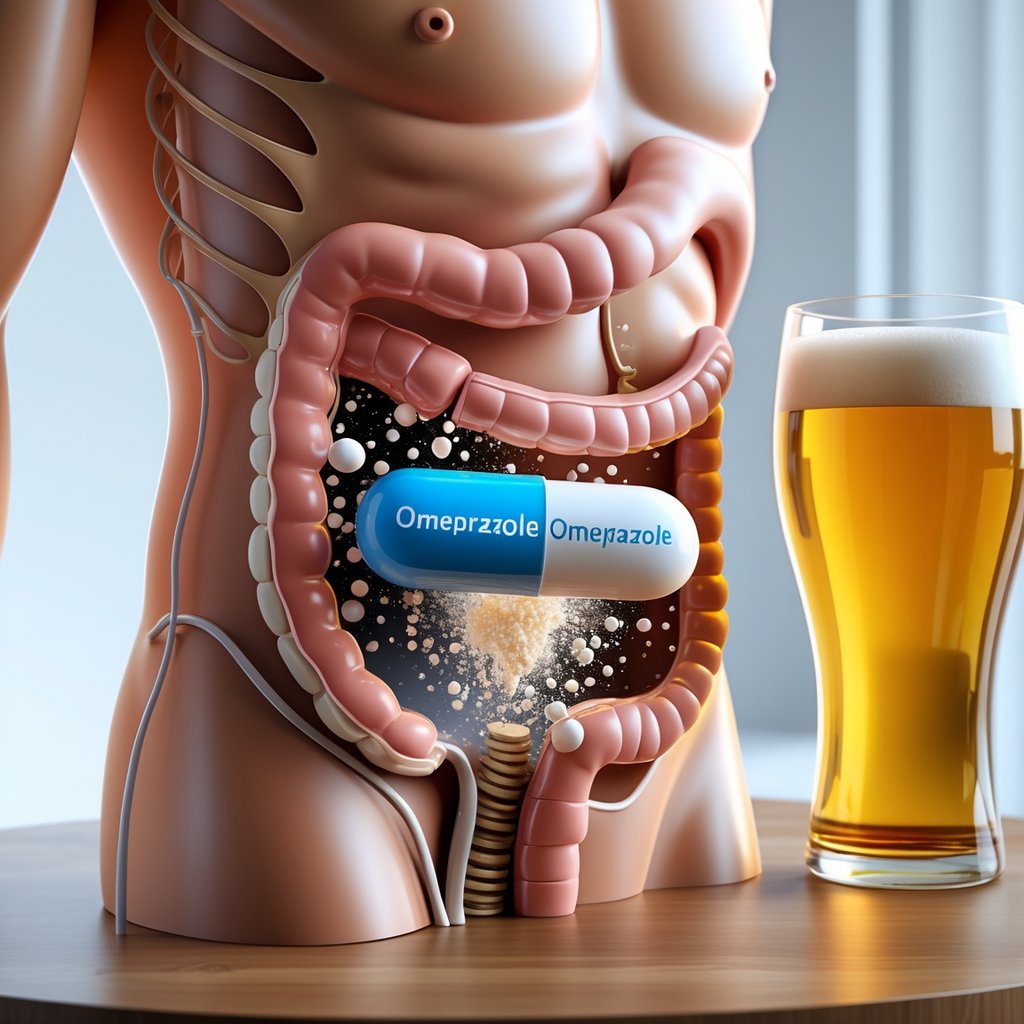
Omeprazole blocks acid production at the cellular level by shutting down the pumps that release acid into the stomach. It belongs to a class of drugs called proton pump inhibitors (PPIs).
What Is Omeprazole Used For?
Omeprazole treats conditions involving excess stomach acid, such as gastroesophageal reflux disease (GERD), erosive esophagitis, and stomach ulcers.
It’s also used for Zollinger-Ellison syndrome and sometimes paired with antibiotics to treat Helicobacter pylori infections.
Common uses:
- Short-term heartburn relief (over-the-counter as Prilosec)
- Long-term GERD management
- Healing damaged esophagus tissue
- Preventing ulcer recurrence
Over-the-counter omeprazole is typically limited to 14 days. Prescription versions can be used longer when needed.
Mechanism of Action of Proton Pump Inhibitors
Proton pump inhibitors like omeprazole target H+/K+ ATPase pumps in the stomach lining. These pumps are the final step in acid secretion.
After you take omeprazole, it travels to the parietal cells in your stomach wall. There, it binds to and disables the acid pumps.
This action is long-lasting because new pumps must be made before acid production resumes. That’s why PPIs work longer than other heartburn medications.
Stomach Acid Reduction Explained
Omeprazole can reduce stomach acid production by up to 90%. Effects start within an hour, but peak relief takes one to four days.
By blocking acid, omeprazole creates an environment where damaged tissue can heal and new damage is less likely.
Each dose lasts about 24 hours. Regular, daily dosing is needed for ongoing relief since the body continually makes new acid pumps.
How Alcohol Affects the Digestive System
Alcohol disrupts digestion by increasing acid production and relaxing muscles that prevent reflux. This creates a tough environment for anyone relying on medications like omeprazole.
Alcohol and Stomach Acid Production
Alcohol prompts the stomach to produce more acid. Beer and wine, in particular, stimulate the release of gastrin—a hormone that boosts acid secretion.
This directly opposes omeprazole’s purpose. Even moderate drinking can raise stomach acid for several hours.
Beer and wine provoke stronger acid responses than spirits like whiskey or gin, but all alcohol increases acid to some extent.
Impact on the Lower Esophageal Sphincter
The lower esophageal sphincter (LES) is the valve between your esophagus and stomach. Alcohol relaxes this muscle, making it easier for acid to flow backward.
This relaxation happens quickly and can last for hours. Studies show regular drinkers have a 48% higher risk of developing GERD than non-drinkers.
Combined with increased acid, this makes alcohol a common trigger for heartburn and reflux.
Alcohol’s Effect on Ulcers and Gastritis
Alcohol damages the stomach’s protective mucus layer, leaving tissue exposed to acid. This can trigger gastritis and worsen ulcers.
For those with ulcers, alcohol slows healing and increases complications. Even small amounts can aggravate symptoms and hinder recovery.
Chronic drinking impairs the stomach’s ability to repair itself, making long-term damage more likely.
Omeprazole and Alcohol: Effects on Acid Reflux and GERD
Alcohol directly undermines omeprazole by increasing stomach acid and relaxing the lower esophageal sphincter. This can worsen GERD symptoms and lead to complications like erosive esophagitis.
Can Alcohol Worsen Acid Reflux Symptoms?
Alcohol worsens acid reflux by stimulating acid production and relaxing the LES. This allows acid to escape into the esophagus, causing heartburn—even if you’re taking omeprazole.
Beer and wine, especially white wine, tend to cause more reflux than spirits. Whiskey and gin may cause less reflux, but individual responses vary.
Regular drinkers face a 48% higher risk of developing GERD. Drinking often goes hand-in-hand with fatty or spicy foods, which can further aggravate symptoms.
GERD and Drinking Alcohol
Managing GERD requires consistent acid suppression. Alcohol irritates the gastrointestinal lining and increases acid, making symptoms worse and treatment less effective.
Even moderate consumption can trigger symptoms for those with active GERD. Some people find that avoiding alcohol completely allows omeprazole to work better.
The total amount of alcohol matters more than timing. Whether you drink with meals or not, alcohol stimulates acid and relaxes the LES for hours.
Erosive Esophagitis Risks
Erosive esophagitis occurs when stomach acid damages the esophageal lining, causing ulcers. Drinking alcohol during treatment can delay healing and increase risks.
Key risks:
- Slower tissue repair
- Increased bleeding from damaged tissue
- Higher risk of esophageal narrowing (strictures)
- Potential progression to Barrett’s esophagus
Patients with erosive esophagitis should avoid alcohol during treatment. After healing, your doctor may advise if limited alcohol is safe for you.
Risks and Side Effects of Mixing Omeprazole with Alcohol
While omeprazole and alcohol don’t interact dangerously, combining them can worsen symptoms and reduce treatment effectiveness. Risks increase with frequent or heavy drinking, especially if you have liver problems.
Potential Side Effects
Mixing omeprazole with alcohol sets up a conflict in the body. Both substances share overlapping side effects that can intensify when combined.
Common side effects include:
-
Headaches that may be more severe than usual
-
Dizziness and lightheadedness
-
Stomach discomfort such as nausea, bloating, and cramps
-
Worsened heartburn symptoms
The main issue is how alcohol acts in the digestive system. It increases stomach acid and relaxes the lower esophageal sphincter—the muscle that keeps acid in the stomach.
This directly opposes omeprazole’s purpose: reducing acid and helping the esophagus heal. Even moderate drinking can trigger these effects.
While omeprazole’s absorption isn’t altered by alcohol, its benefits are undermined when new acid is introduced.
Long-Term Health Risks
Long-term omeprazole use comes with specific health risks, which alcohol can worsen. Proton pump inhibitors may increase the risk of nutrient deficiencies, especially magnesium and vitamin B12.
Regular alcohol use compounds these deficiencies, as heavy drinking also impairs nutrient absorption. Long-term PPI use may be linked to increased fracture risk and Clostridium difficile infections in hospitalized patients.
For those on blood thinners with omeprazole, alcohol creates additional complications. It can alter blood clotting and interact with anticoagulants, raising bleeding risks that require monitoring.
Liver Disease and Omeprazole Use
People with liver disease face special risks when combining omeprazole and alcohol. The liver processes both substances, and existing damage reduces its capacity to cope.
Alcohol causes direct liver toxicity, and drinking with liver disease accelerates harm. Omeprazole is generally safe with mild to moderate liver impairment, but the combination calls for caution.
Anyone with liver conditions should consult a healthcare provider before drinking while on omeprazole. Impaired liver function can cause the medication to build up, increasing side effect severity.
Those with cirrhosis or advanced liver disease are typically advised to avoid alcohol entirely.
Other Drug Interactions and Special Considerations
Omeprazole doesn’t interact dangerously with alcohol itself, but it can interact with other medications. These interactions can become more serious when alcohol is involved.
Alcohol and Other Medications
Omeprazole can interact with common drugs like warfarin (a blood thinner), citalopram (an antidepressant), and digoxin (a heart medication). These interactions occur because omeprazole affects liver drug processing.
Naproxen deserves special mention. Many take this pain reliever with omeprazole to protect the stomach, but adding alcohol creates a triple threat to digestive health.
Medications that pose risks when combined with alcohol include:
-
Sedatives (Valium, Xanax) – risk of extreme drowsiness and loss of consciousness
-
ADHD stimulants (Ritalin, Concerta) – may cause dangerous blood pressure changes
-
Opioid painkillers (OxyContin) – risk of slowed breathing and poor coordination
-
Antibiotics – especially those for H. pylori treatment with omeprazole
These combinations can trigger dizziness, memory loss, and low blood pressure. The main concern is the interaction between alcohol and these medications, not omeprazole itself.
When to Avoid Alcohol Altogether
Alcohol should be avoided in certain situations. If omeprazole is part of H. pylori treatment, alcohol can interfere with antibiotics.
People with alcohol dependence face heightened risks. Combining PPIs with chronic alcohol use increases the risk of alcoholic liver disease, partly because reduced stomach acid allows harmful gut bacteria to thrive.
Alcohol should also be avoided by those with erosive esophagitis or stomach ulcers. It directly irritates damaged tissue, causing pain and slowing healing.
Anyone experiencing worsening symptoms while drinking should cut out alcohol rather than increasing medication.
Safe Habits and Alternatives for Managing Acid-Related Conditions
Managing heartburn, acid reflux, and ulcers requires smart daily choices and alternatives to medication. Targeted lifestyle adjustments can reduce symptoms and protect digestive health.
Tips for Reducing Heartburn Without Alcohol
Eliminating alcohol removes a major trigger, but other strategies help keep heartburn at bay. Eating smaller, balanced meals at regular intervals prevents the stomach from becoming overly full.
Finishing the evening meal three to four hours before bed gives the digestive system time to process food.
Immediate relief tactics include:
-
Sleeping with the head of the bed raised
-
Wearing loose clothing instead of tight waistbands
-
Sitting upright during meals
-
Avoiding bending or lifting right after eating
Certain foods can worsen acid reflux and ulcer symptoms. Coffee, carbonated drinks, citrus, tomatoes, spicy foods, chocolate, and peppermint are frequent triggers.
Rich, fatty, or fried foods also increase acid production. Identifying and avoiding personal triggers is more effective than eliminating all possible offenders.
Lifestyle Changes for Digestive Health
Weight management stands out as one of the most effective long-term solutions for acid reflux. Excess weight increases abdominal pressure, forcing stomach contents back into the esophagus.
Maintaining a healthy weight naturally reduces this mechanical pressure. Stress management techniques like yoga can decrease stomach acid production.
Minimizing stressful situations is also beneficial. Psychological therapies such as cognitive behavioral therapy may help when stress triggers symptoms.
Smoking cessation is non-negotiable for digestive health. Smoking weakens the sphincter muscle at the bottom of the esophagus, making reflux more likely.
It also slows healing in existing ulcers. For those managing these conditions, quitting delivers measurable improvements within weeks.