
When comparing ADHD medications, many people want to know if Vyvanse is stronger than Adderall. Neither Vyvanse nor Adderall is objectively stronger than the other; strength depends on individual response, dosage, and duration.
Both are FDA-approved stimulants that increase dopamine and norepinephrine in the brain to treat ADHD symptoms. The real question is which medication works better for your specific needs.
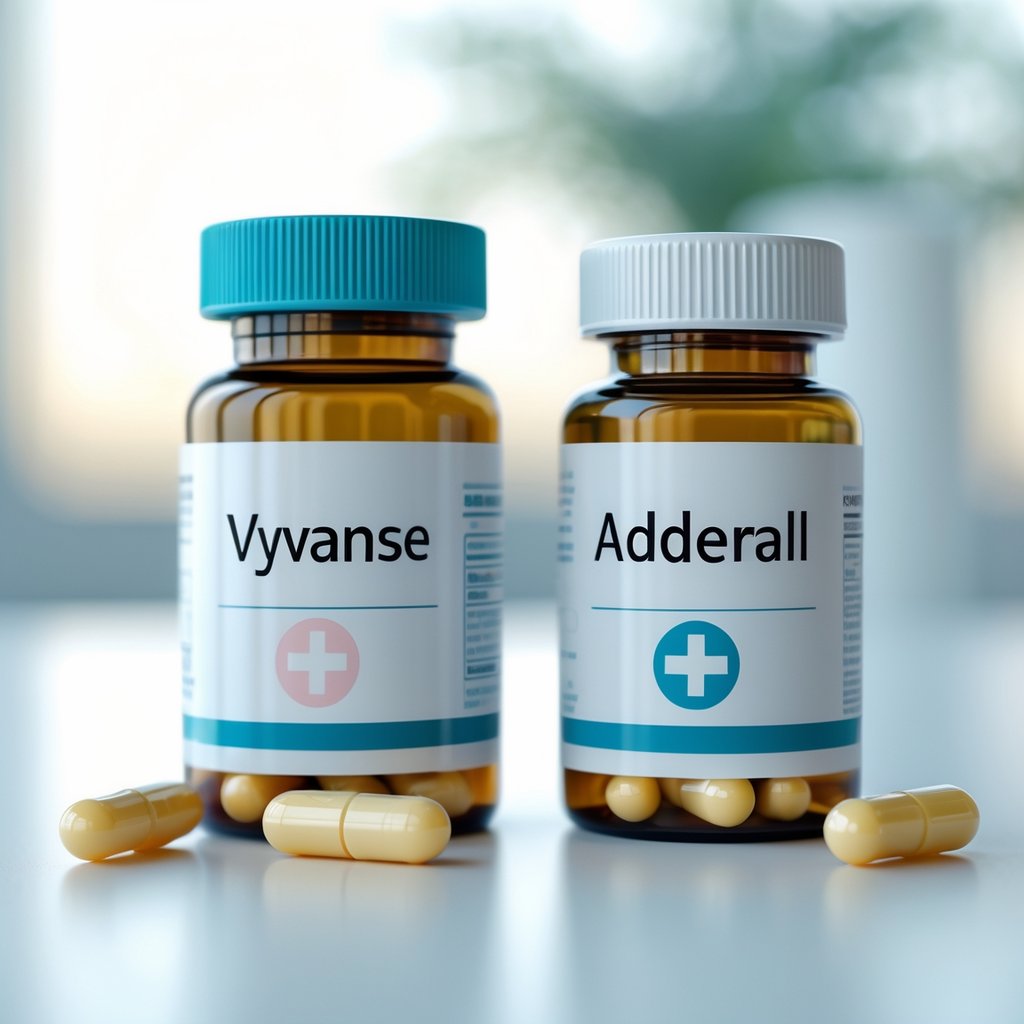
Vyvanse takes longer to kick in but lasts up to 14 hours. Adderall works faster but wears off sooner.
These differences affect how each medication feels throughout the day. The choice often comes down to which fits better with your lifestyle.
Vyvanse and Adderall differ in how they work in your body, their side effect profiles, costs, and potential for misuse. Understanding these nuances can help you have more informed conversations with your healthcare provider.
Is Vyvanse Stronger Than Adderall?
Neither Vyvanse nor Adderall is objectively stronger. “Strength” depends on dosage, duration, and individual response.
Comparing Medication Strength
Vyvanse and Adderall can’t be compared milligram-to-milligram because they contain different active ingredients. Vyvanse uses lisdexamfetamine, a prodrug that requires conversion in the digestive system. Adderall contains a mixture of amphetamine salts that work immediately.
Vyvanse doses range from 5–70 mg once daily. Adderall XR typically ranges from 5–30 mg once daily, while immediate-release Adderall is taken one to three times per day at 5–20 mg per dose.
The lower milligram numbers for Vyvanse don’t indicate greater strength. Each is a different chemical compound measured on its own scale.
Key differences in how they work:
- Vyvanse onset: 90 minutes
- Adderall IR onset: 30–60 minutes
- Vyvanse duration: Up to 14 hours
- Adderall XR duration: 8–12 hours
- Adderall IR duration: 4–6 hours
How Effectiveness is Measured
ADHD medication effectiveness is measured by symptom improvement, not by comparing dosages. Both medications increase dopamine and norepinephrine, helping with focus, impulse control, and hyperactivity.
Research shows both drugs work well for ADHD, but head-to-head studies are limited. Clinical trials demonstrate that both significantly reduce ADHD symptoms compared to placebo.
Individual response varies. Some patients achieve better results with one medication due to genetic differences, health conditions, or other medications.
When to Choose One Over the Other
Vyvanse is often recommended for patients needing all-day symptom coverage from a single morning dose. Its gradual onset may feel smoother, with less abrupt effects as it wears off.
Adderall offers more flexibility with immediate-release and extended-release options. The faster onset benefits those who need quick symptom control.
Vyvanse may be preferred for:
- Patients with a history of substance misuse (lower abuse potential)
- Those needing consistent 12–14 hour coverage
- Individuals with binge eating disorder (FDA-approved for this condition)
Adderall may be preferred for:
- Budget-conscious patients (generic versions cost less)
- Those requiring flexible dosing schedules
- Patients who benefit from faster onset
Healthcare providers consider your symptom patterns, daily schedule, medications, and medical history when choosing between these options.
Core Differences Between Vyvanse and Adderall
Vyvanse and Adderall differ in chemical makeup, formulations, and approved uses. These distinctions affect how each medication works and who may benefit.
Chemical Composition and Prodrug Concept
Adderall contains mixed amphetamine salts—a combination of four different amphetamine compounds, including dextroamphetamine and amphetamine in equal parts.
Vyvanse contains only lisdexamfetamine dimesylate, a prodrug that remains inactive until metabolized. Enzymes in red blood cells convert it into dextroamphetamine and lysine.
This conversion creates a gradual onset for Vyvanse. The prodrug design also makes Vyvanse harder to misuse through non-oral routes.
Forms: IR, XR, and Chewables
Adderall comes in two formulations: immediate-release (IR) and extended-release (XR). Adderall IR works within 30–60 minutes and lasts 4–6 hours, typically prescribed twice daily.
Adderall XR uses a bead system for two-phase release, extending effects to 8–12 hours. Patients take it once daily.
Vyvanse is available as a single long-acting capsule lasting up to 14 hours. The capsule can be opened and mixed with water or juice for those who have difficulty swallowing.
Adderall also offers chewable tablets in certain strengths.
FDA Approvals and Approved Uses
Both medications treat ADHD in patients aged 6 and older.
Adderall is FDA-approved for:
- ADHD in children and adults
- Narcolepsy
Vyvanse is FDA-approved for:
- ADHD in children and adults
- Moderate to severe binge eating disorder in adults
Vyvanse’s approval for binge eating disorder reflects its smoother, longer duration of action.
How Vyvanse and Adderall Work in the Body
Both medications are central nervous system stimulants, but they differ in delivery and duration.
Mechanism of Action
Vyvanse is a prodrug, entering the body inactive and converted through metabolism into active dextroamphetamine. Your body activates the medication.
Adderall contains amphetamine salts that are immediately active upon absorption. Both ultimately deliver amphetamine-based stimulants to the brain.
Vyvanse’s prodrug design creates a gradual release. Adderall’s direct approach means faster activation.
Onset and Duration of Effects
Adderall typically begins working within 30–60 minutes. Vyvanse requires about 90 minutes for the body to convert it.
Duration of action:
- Adderall IR: 4–6 hours
- Adderall XR: 8–12 hours
- Vyvanse: 10–14 hours
Vyvanse’s longer duration often eliminates the need for afternoon doses. Some prescribers combine Vyvanse with Adderall IR for extended coverage, requiring careful supervision.
Impact on Dopamine and Norepinephrine
Both medications increase dopamine and norepinephrine, essential for attention, focus, and impulse control.
They block reuptake and promote release of these neurotransmitters, leading to higher concentrations in the brain.
Vyvanse’s gradual conversion means dopamine levels rise more slowly, which may reduce the “rush” feeling and lower abuse risk.
Dosage and Administration
Vyvanse typically starts at 30 mg once daily. Adderall usually begins at 5 mg once or twice per day.
Standard Dosing Guidelines
Vyvanse is once-daily, starting at 30 mg and increasing to a maximum of 70 mg per day. It lasts up to 14 hours.
Adderall IR starts at 5 mg once or twice daily, with a maximum of 40 mg split into 2–3 doses. Effects last 4–6 hours per dose.
Adderall XR begins at 5–20 mg once daily, with a maximum of 60 mg per day and a duration of 8–12 hours.
Children often start at lower doses. Vyvanse begins at 30 mg for pediatric patients; Adderall IR may start as low as 2.5 mg.
Adjusting Dosage for Individuals
Providers adjust dosages based on response and side effects, not rigid conversion charts. Switching from Vyvanse to Adderall requires dose reduction; 30 mg Vyvanse is roughly equivalent to 10 mg Adderall XR or 5 mg Adderall IR twice daily.
These conversions are estimates. Vyvanse dosage numbers appear higher because its molecular structure includes lysine, which adds weight but no therapeutic effect.
Individual metabolism and coverage needs vary. Providers start with the lowest effective dose and increase gradually, monitoring for side effects. Never adjust these medications without medical supervision.
Side Effects and Safety Considerations
Both medications share many common side effects. Vyvanse’s prodrug nature may lead to fewer severe reactions compared to Adderall’s direct stimulant action.
Common and Serious Side Effects
Common side effects include decreased appetite, dry mouth, stomach pain, nausea, dizziness, and insomnia. Weight loss is common due to appetite suppression.
Headaches, nervousness, mood swings, rapid heartbeat, and palpitations can occur.
Serious side effects require immediate attention:
- Seizures
- Psychosis or disconnection from reality
- Severe mania
- Priapism (prolonged, painful erections)
- Stevens-Johnson syndrome (skin blistering)
- Anaphylaxis
Children may experience temporary growth delays that require monitoring.
Cardiovascular and Psychiatric Risks
The FDA issues a boxed warning—their highest safety alert—for both Vyvanse and Adderall. This warning highlights the risk of abuse, dependence, and potential cardiovascular events such as stroke, heart attack, or sudden death with overuse.
Patients with existing heart conditions should exercise extreme caution. Those with severe heart disease should not take either medication.
Increased heart rate and elevated blood pressure are expected effects that can worsen cardiovascular problems. Psychiatric risks include the development or worsening of bipolar disorder, anxiety disorders, and psychotic symptoms.
People with pre-existing mental health conditions require careful evaluation before starting treatment. Tics and tremors may emerge or intensify during use.
Sexual and Appetite-Related Effects
Loss of appetite is a consistent effect of both medications, often leading to weight loss if not monitored. Regular weight checks are recommended, especially in the first months of treatment.
Erectile dysfunction affects male users of both Vyvanse and Adderall. Adderall can also cause decreased sex drive in some patients.
These sexual side effects may persist throughout treatment and sometimes require dose adjustments or medication changes. Excessive sweating and shortness of breath can accompany these metabolic changes.
Vyvanse users report higher rates of urinary tract infections compared to Adderall users.
Withdrawal and Discontinuation
Withdrawal symptoms can emerge when stopping either medication abruptly after regular use. Fatigue, depression, increased appetite, and sleep disturbances are the most common withdrawal effects.
The severity depends on dosage, duration of use, and individual physiology. Vyvanse’s extended-release formulation may produce a smoother offset with potentially milder withdrawal symptoms, while Adderall IR often causes more abrupt withdrawal.
Medical supervision during discontinuation reduces risks. Healthcare providers usually recommend gradual dose reduction rather than sudden cessation.
Withdrawal symptoms generally peak within the first few days and resolve within one to two weeks. Psychological effects may persist longer.
Misuse, Addiction, and Abuse Potential
Both medications carry significant risks for misuse and addiction as Schedule II controlled substances. Vyvanse’s prodrug design creates a lower abuse potential compared to Adderall’s immediate-release formulations, though neither medication is risk-free.
Controlled Substance Classification
The DEA classifies both Vyvanse and Adderall as Schedule II controlled substances. This indicates a high potential for abuse and the risk of severe psychological or physical dependence.
Schedule II status means these medications face strict prescribing regulations. Doctors cannot call in refills, and patients need new written prescriptions for each fill.
This classification applies to all formulations, including extended-release versions. Millions of Americans misuse prescription stimulants, according to SAMHSA data.
Both drugs affect the central nervous system in ways that can lead to dependence when used improperly.
Misuse and Addiction Risks
Physical dependence can develop with regular use of either medication. Users may experience withdrawal symptoms when stopping abruptly, including fatigue, depression, and changes in sleep patterns.
The addiction potential is significant for both drugs. Common misuse patterns include taking higher doses than prescribed, using medication without a prescription, crushing and snorting pills, or taking doses more frequently than directed.
Adderall faces higher rates of diversion and non-medical use compared to Vyvanse. Its immediate-release formulation produces faster onset effects that some people seek for non-medical purposes.
The euphoria associated with immediate-release stimulants increases their appeal for recreational use.
Why Abuse Potential Differs
Vyvanse’s prodrug design creates a biochemical barrier to abuse. The body must convert lisdexamfetamine into active dexamphetamine through metabolism, a process that cannot be bypassed by crushing, snorting, or injecting the medication.
Vyvanse produces a delayed onset of effects and lower peak blood concentrations compared to immediate-release dexamphetamine. Studies show this results in diminished euphoric feelings, reducing the reinforcing properties that drive addiction.
Adderall lacks this protective mechanism. Its active amphetamine salts become available immediately upon ingestion, and alternative routes of administration can intensify effects.
Epidemiological studies consistently find substantially lower abuse rates for Vyvanse than immediate-release amphetamine formulations. Research shows Vyvanse still carries dose-dependent reinforcing properties, and its abuse remains possible.
Cost and Accessibility
Price differences between these medications can significantly impact treatment decisions. Availability issues occasionally affect both drugs, and generic options have changed the financial landscape.
Cost Differences
Without insurance coverage, brand-name Vyvanse costs about $19 per tablet, while brand-name Adderall runs around $11 per tablet at most pharmacies. Adderall is notably less expensive at full retail pricing.
Generic versions dramatically reduce costs for both medications. Generic Adderall prices can drop to $20-$30 for a 30-day supply of 20mg capsules with pharmacy discount cards.
Generic Vyvanse (lisdexamfetamine) typically costs around $80 for 30 capsules at 30mg strength when using similar discount programs. The introduction of generic lisdexamfetamine has made Vyvanse more accessible, but generic Adderall remains more affordable.
Insurance and Generic Versions
Up to 80% of insurance plans provide coverage for Vyvanse, though Medicare Part D plans commonly exclude it from their formularies. Adderall coverage varies significantly by plan, with many insurers covering only generic versions.
Copay amounts differ based on specific insurance plans and any available copay assistance cards. Patients should verify their plan’s formulary before starting treatment, as out-of-pocket costs can vary widely.
Generic amphetamine/dextroamphetamine salts (generic Adderall) have been available for years, providing substantial cost savings. Generic lisdexamfetamine became available more recently, expanding affordable options for patients who respond better to Vyvanse.
Availability and Shortages
Both medications experience periodic supply chain disruptions. Adderall shortages have been particularly notable in recent years, affecting both brand-name and generic versions.
The availability of generic Adderall from multiple manufacturers typically helps mitigate shortage impacts, though demand sometimes outpaces supply. Fewer manufacturers produce generic Vyvanse, which can create accessibility challenges when production issues arise.
Patients may need to contact multiple pharmacies to fill prescriptions during shortage periods. Healthcare providers can sometimes prescribe alternative dosing schedules or temporarily switch medications when necessary.
Alternatives and Non-Stimulant Options
Several other medications can effectively manage ADHD symptoms, including both stimulant and non-stimulant options. Behavioral therapy offers another path forward, particularly when combined with medication or used on its own.
Other ADHD Medications
Ritalin and Concerta both contain methylphenidate, which works differently from amphetamine-based medications. Ritalin comes in immediate-release and extended-release formulas, while Concerta provides up to 12 hours of symptom control in a single dose.
Dexedrine (dextroamphetamine) is another stimulant option. It’s chemically similar to one of Adderall’s active ingredients and may produce fewer side effects in some people.
Non-stimulant medications provide alternatives for those who can’t tolerate stimulants:
- Strattera (atomoxetine) increases norepinephrine levels and takes several weeks to reach full effectiveness.
- Intuniv (guanfacine) and Kapvay (clonidine) were originally blood pressure medications but help with ADHD symptoms.
- Qelbree (viloxazine) is a newer non-stimulant approved for ADHD in children and adults.
Non-stimulant medications are particularly useful for patients with anxiety, substance abuse history, or cardiovascular concerns. They don’t carry the same abuse potential as stimulants.
Behavioral Therapy and Non-Drug Treatments
Behavioral therapy teaches practical skills for managing ADHD symptoms without medication. Cognitive behavioral therapy (CBT) helps patients develop organizational strategies and time management skills.
CBT also offers coping mechanisms for impulsivity. For children, parent training programs teach caregivers how to reinforce positive behaviors.
These programs help establish consistent routines at home. School-based interventions include individualized education plans and classroom accommodations.
Some adults benefit from coaching programs that focus on workplace productivity. These programs also address daily task completion.
Lifestyle modifications like regular exercise, adequate sleep, and structured routines support symptom management. Combining behavioral therapy with medication often yields the best results.